


Introduction: The $100 Billion Trust Crisis
The supplement market in 2025 is a paradox of historic scale and unprecedented skepticism. While the industry accelerates toward a projected $103.56 billion valuation by 2033—fueled by a robust 7.9% CAGR—it is colliding with a „digitally engineered“ consumer. This buyer possesses a high degree of health literacy and utilizes AI-assisted scrutiny to navigate a fragmented marketplace of over 100,000 unique products.
The era of „greenwashed promises“ and „pseudo-clinical buzzwords“ is over. For brands to survive, they must move past generic wellness narratives and adopt an intelligent, evidence-based approach to promotion. To win in 2025, growth strategists must abandon the traditional playbook in favor of these counter-intuitive rules.
——————————————————————————–
1. Stop Optimizing for Clicks; Start Optimizing for Answers
Traditional SEO is dead. We have entered the „zero-click“ era of Answer Engine Optimization (AEO). Platforms like Google’s AI Overview, Perplexity, and ChatGPT now satisfy informational queries directly on the search results page. Data shows a staggering 34.5% drop in average organic click-through rates (CTR) when an AI Overview is present, with some high-traffic keywords plunging by as much as 64%.
However, viewing this as a traffic loss is a tactical error. In 2025, the zero-click environment filters for high-intent buyers. Visitors referred via AI-generated summaries are significantly more qualified: they stay on-site 8% longer, view 12% more pages, and are 23% less likely to bounce than traditional search traffic. As Google CEO Sundar Pichai noted, content and links featured inside an AI Overview actually garner higher CTRs than those in regular results because the AI has already established the brand’s authority. Your goal is no longer to be the first link; it is to be the primary citation that answers the prompt.
——————————————————————————–
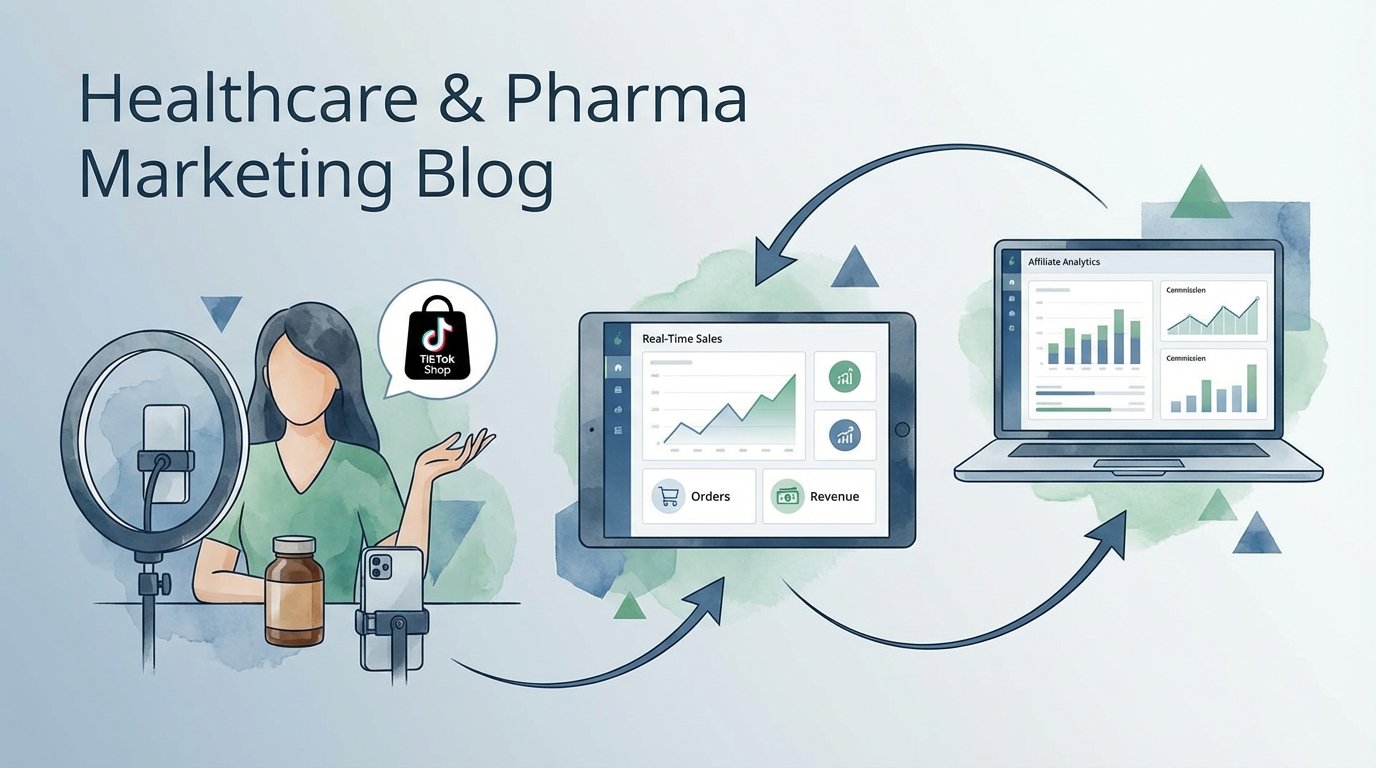
2. TikTok Shop is a Logistics System, Not a Viral Lottery
Treating TikTok as a „viral lottery“ is a firing offense for a growth strategist in 2025. TikTok has shifted from an experimental platform to a retail engine, evidenced by an H1 2025 GMV of $5.8 billion, a 200% year-over-year surge. With health and beauty accounting for nearly 80% of total sales, success is an operations game, not a creative stunt.
The „System, Not a Stunt“ approach requires a rigid operational cadence:
– AI Creator Search: Move beyond follower counts. Use AI to shortlist creators based on past GMV, niche intent, and audience alignment.
– Rapid Sampling: Ship 30+ samples within the first week of any campaign.
– 14-Day Posting Windows: Enforce tight briefs to maintain algorithmic momentum.
Strategy favors the micro-affiliate (1k–50k followers) over the mega-celebrity. These creators function as authentic peer-to-peer advocates, which is the primary currency of trust in social commerce. As Bryan Rangel, Head of Partnerships at UpTk, asserts: _“The perfect TikTok Shop flywheel blends identity content, affiliate muscle, and ads on viral moments.“_
——————————————————————————–
3. The „Receipts“ Era: Traceability as Your Primary Creative Asset
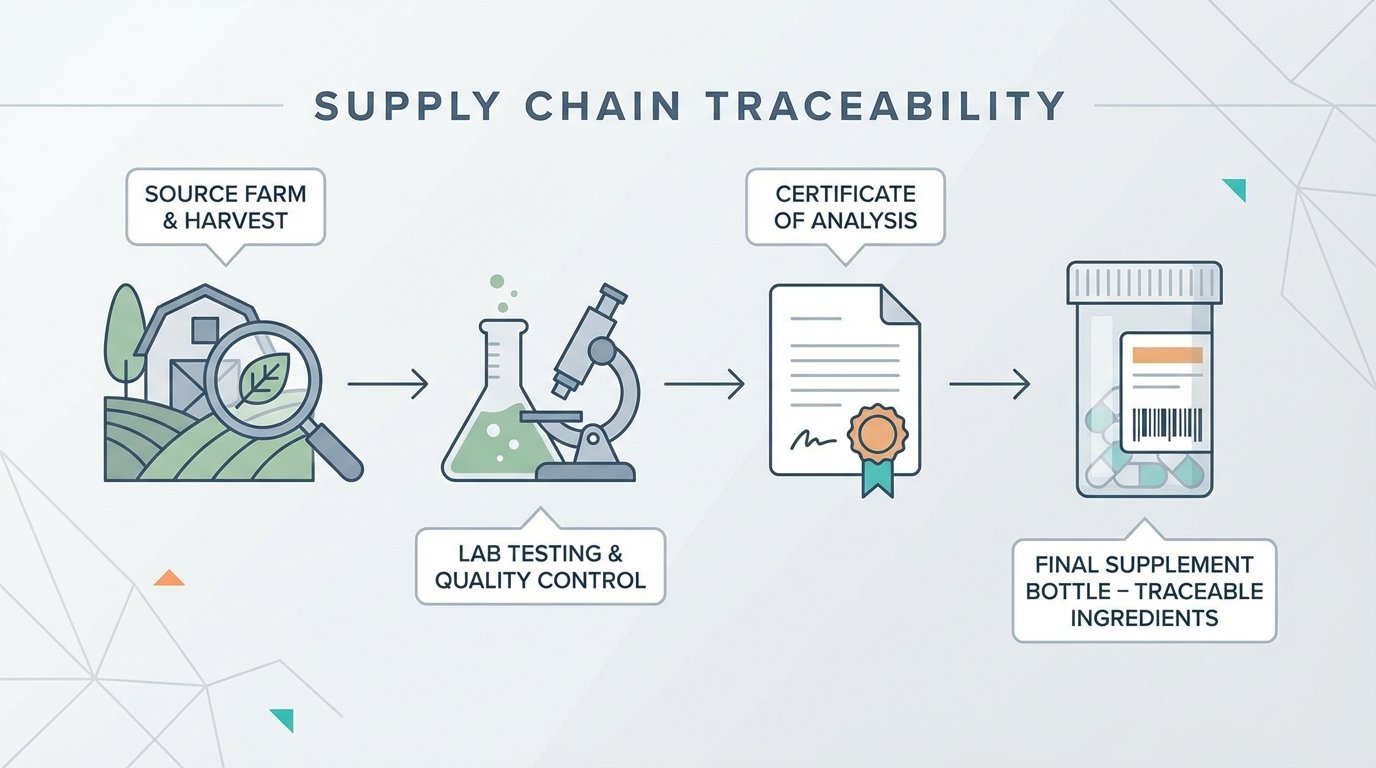
Transparency is no longer a footer on your website; it is your most powerful ad copy. In the „Receipts“ era, leading brands like Ritual and Seed have proven that showing the literal mapping of the supply chain converts at a higher rate than high-production lifestyle imagery. Radical transparency is a relationship of accountability, not just a label requirement.
Central to this is the „Made Traceable®“ framework, which defines the final place of manufacturing as the specific location where an ingredient is tested and finally processed for sale. This is the precise point where the „Certificate of Analysis“—the literal receipt of quality—is generated.
The Traceability Roadmap:
– Supplier Identification: Publicly name the exact partners providing active ingredients.
– Final Manufacturing Disclosure: Disclose where the ingredient is tested, processed, and validated via a Certificate of Analysis.
– Clinical Rationale: Provide the peer-reviewed research that justifies the specific dosage and form (e.g., Magnesium Glycinate vs. Oxide).
——————————————————————————–
4. The Micro-Niche Explosion: Postbiotics and GLP-1 Companions
Generic multivitamins are being cannibalized by „targeted interventions.“ Two dominant micro-niches have emerged for 2025:
- GLP-1 Companions: A massive secondary market for weight-loss medication users who require targeted support for muscle preservation and nutrient gaps.
- Postbiotics: This „precision gut health“ category is growing at 15% annually. Unlike probiotics, postbiotics are shelf-stable byproducts that offer targeted biological outcomes without the volatility of live cultures.
Growth in these niches is driven by „cellular resilience“ narratives rather than „anti-aging“ fluff. Marketers must focus on measurable cellular impact and target specific biomarkers.
Longevity Ingredients & Clinical Evidence Framework
| Ingredient | Evidence | Primary Mechanism | Target Biomarker |
|---|---|---|---|
| Omega-3 (EPA/DHA) | 5/5 | Combat chronic inflammation | Triglycerides / HDL |
| NMN / NR | 4/5 | Increase NAD+ levels | NAD+ Concentration |
| Magnesium | 4/5 | Supports 600+ enzymatic reactions | Fasting Blood Sugar |
| Curcumin | 4/5 | Reduce oxidative stress | C-reactive protein (CRP) |
——————————————————————————–
5. The „Humble“ Single Image: Why Simple Beats Over-Produced
A definitive analysis of 500 Meta ads reveals that „humble“ single-image ads consistently outperform high-production video and polished UGC. Single-image „winner shots“ have an average lifecycle of 268 days, significantly outlasting complex video assets that fatigue within weeks.
While the creative execution is simplified, the copywriting must be hyper-specific. We use the Quantified Benefit formula: replace vague claims like „High Protein“ with „25g of Grass-Fed Whey.“ This signals instant value to a research-heavy consumer. Furthermore, product demonstrations—showing the specific texture of a powder or the transparency of a capsule—reduce buyer hesitation by making the daily „ritual“ tangible.
The strategic trade-off is clear: while we simplify the creative for Meta, we increase the complexity of our advocacy. Models like „Seed University“ ensure that while the ad is a simple image, the influencer behind the broader campaign has passed a 59-minute exam on microbiome science and FTC compliance. This high barrier to entry protects long-term enterprise value by filtering for scientific literacy.
——————————————————————————–
6. Regulatory Guardrails: The FTC’s Non-Negotiables
Compliance is the bedrock of longevity. In 2025, the FTC has moved beyond literal truth to the principle of „Net Impression.“ This means marketers are responsible for the total takeaway of an ad—text, imagery, and product name combined.
For example, a product named „Arthricure“ is a violation because it implies a disease claim through the name alone, even if the copy only mentions „joint support.“
Non-Negotiable Compliance Rules:
– RCT Requirement: All efficacy claims must be backed by Randomized Controlled human clinical Trials.
– Net Impression Responsibility: Product names and depictions must not imply curative properties for diseases (e.g., diabetes, arthritis).
– Testimonial Integrity: The disclaimer „results may vary“ is legally insufficient. Advertisers must explicitly state the generally expected results for a typical consumer.
The consequences of a false claim are no longer just legal—they represent a total loss of trust that can destroy a brand in a market where consumers are using AI to check your receipts in real-time.
——————————————————————————–
Conclusion: The Future-Proof Framework
As we look toward 2026, the industry will continue to favor brands that treat data as a creative asset and science as a baseline requirement. The „personal longevity equation“ has moved from guesswork to precise biological evidence.
Is your brand built on the shifting sands of wellness trends, or is it anchored in the clinical receipts of science? In a $100 billion market, the answer is the difference between an industry leader and a historical footnote.