

1. Introduction: The High-Quality Ingredient Paradox
In the high-stakes landscape of the 2025–2026 wellness industry, technically superior formulations are failing at an alarming rate while lesser products capture dominant market share. This is the „High-Quality Ingredient Paradox.“ Many founders operate under the delusion that a gold-standard COA (Certificate of Analysis) and rigorous lab testing are sufficient to secure a brand’s future. They are wrong.
As we transition into 2026, the definition of branding has evolved from mere aesthetics to a rigorous discipline of trust and regulatory transparency. The most expensive mistakes today are rarely made in the lab; they are made in the marketing suite. „Invisible“ legal traps and strategic missteps can trigger $100 million oversights through regulatory misbranding enforcement, catastrophic data privacy settlements, or a „death spiral“ of customer acquisition costs (CAC). To survive, your strategy must move beyond the formulation and address the „intended use doctrine“ that governs your very existence in the market.
2. Mistake #1: The „Everyone“ Trap in Audience Targeting
The most common branding failure remains the refusal to narrow the focus. Marketing a supplement to „men and women aged 18 to 65 who want better health“ is a recipe for business collapse. In 2025, consumers do not buy „general health“; they buy solutions tailored to their specific lifestyle and pain points.
From a growth specialist’s perspective, generic messaging is an algorithmic disaster. When your messaging is broad, it confuses the machine-learning models (Meta, Google) attempting to identify your „seed audience.“ This lack of specificity drives up CAC and lowers Return on Ad Spend (ROAS) because your „Unique Selling Proposition“ (USP) is too diluted to convert.
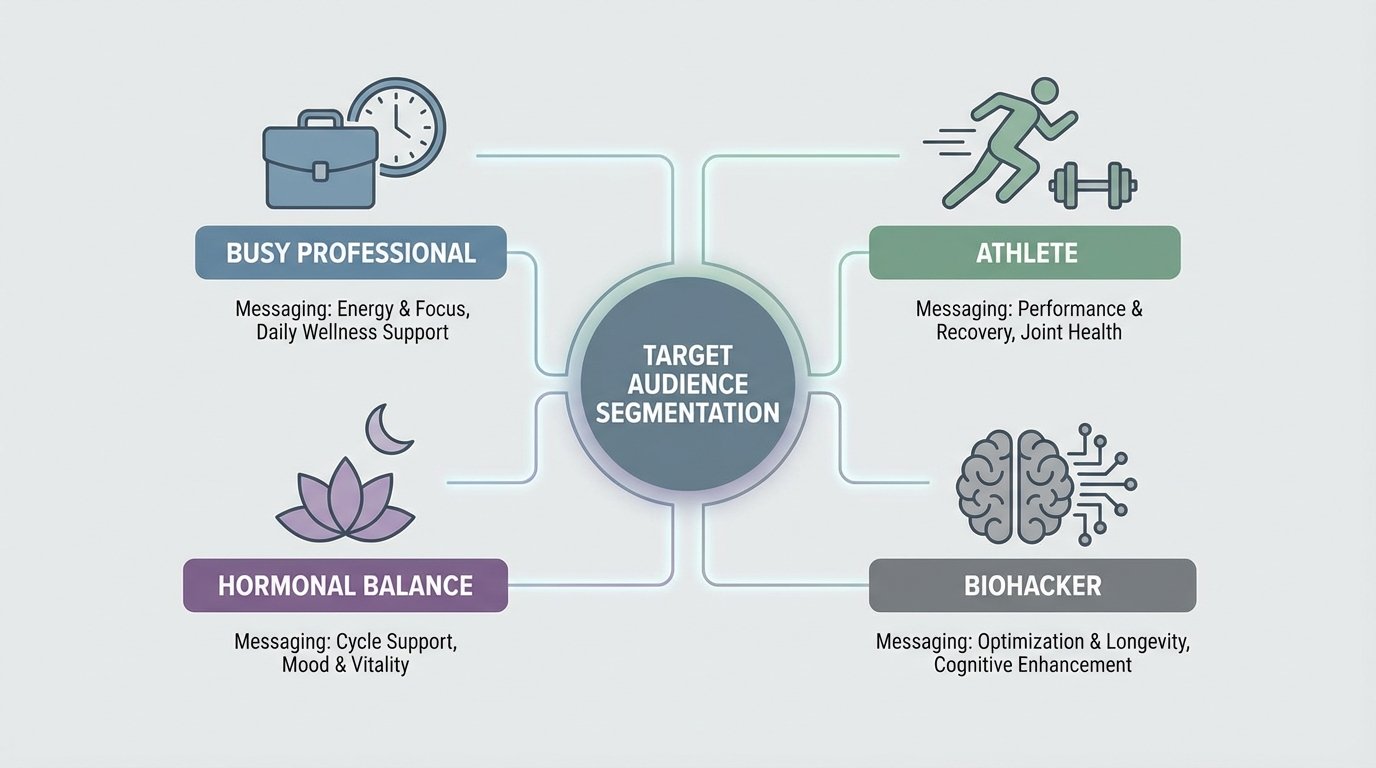
Essential Audience Segments for 2025 Success:
– Busy Professionals: Requires language focused on sustained cognitive energy, „no-crash“ productivity, and mental clarity.
– Athletes: Focus on recovery speed, performance optimization, and third-party safety certifications (e.g., NSF Certified for Sport).
– Women Managing Hormonal Balance: Requires empathetic, empathetic lifestyle-aligned messaging and specific benefit-driven visuals rather than clinical coldness.
– Biohackers: Values deep-dive data, transparency in sourcing, and innovative delivery mechanisms (e.g., liposomal technology).
3. Mistake #2: Navigating the HIPAA-FTC Privacy Blind Spot
Many supplement brands believe they are exempt from strict health data privacy rules because they are not „covered entities“ under HIPAA. This is a $100 million misconception. While you may not be a doctor’s office, you are subject to the FTC Act and the Health Breach Notification Rule regarding consumer health data.
The FTC has made it clear that „health information“ includes any data that enables an inference about a consumer’s health—including browsing history or location data (e.g., tracking a consumer visiting a cancer center or purchasing a pregnancy test).
„Health information includes more than treatments and diagnoses. It’s anything that conveys information or enables an inference about a consumer’s health. For example, browsing information, location information… or purchase information… can convey health information.“ — _Federal Trade Commission Guidance_
Cautionary Tales: The FTC has recently targeted BetterHelp, GoodRx, and Premom for disclosing consumers’ health information for advertising purposes without affirmative express consent. Pro-Tip: Avoid using „HIPAA Compliant“ or „HIPAA Secure“ badges on your storefront if you are not a covered entity. These badges can be deemed deceptive and misleading under the FTC Act if they create a false sense of security regarding your data sharing practices with third-party trackers.
4. Mistake #3: Treating Science as the Hook Rather than the Proof
While scientific backing is essential for credibility, overloading your marketing with jargon often pushes customers away. Most consumers are not looking for a biochemistry lecture; they want to know how the product will improve their life.
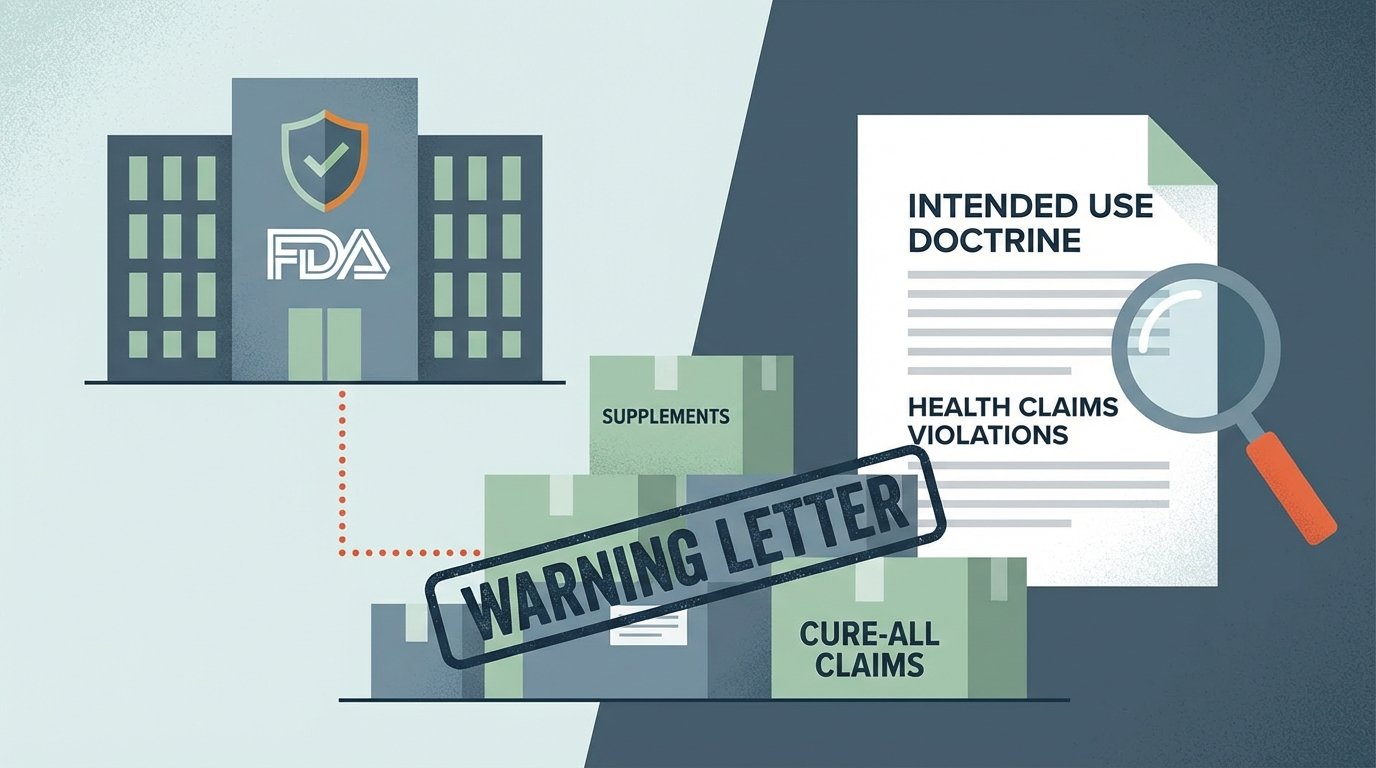
More importantly, jargon-heavy copy increases your enforcement risk. Under the „Intended Use Doctrine,“ the FDA determines what your product is based on your claims. If your scientific explanations sound like a promise to cure, mitigate, or treat a disease, the FDA will reclassify your supplement as an unapproved (and therefore misbranded) drug.
Marketing Copy Comparison (Tailored for the „Busy Professional“):
– Bad (Jargon-Heavy): „Our proprietary compound inhibits the 11β-HSD1 enzyme to modulate cortisol secretion at the cellular level for homeostatic regulation.“
– Good (Benefit-Focused): „Master your morning without the 3 p.m. crash. Our formula supports natural focus, helping you stay productive and refreshed until the day is done.“
5. Mistake #4: Mislabeling Health Claims as Structure/Function Claims
The legal distinction between types of claims is the difference between a thriving brand and a product seizure.
– Health Claims: Link a nutrient to a disease (e.g., „Calcium reduces the risk of osteoporosis“). These require „significant scientific agreement“ and FDA pre-approval.
– Nutrient Content Claims: Describe the level of a nutrient (e.g., „High in Fiber“ or „Low Sodium“). These must follow strict percentage-based rules (e.g., 20% or more of Daily Value for „High“ claims).
– Structure/Function (S/F) Claims: Describe how a nutrient affects the body’s structure or functions (e.g., „Builds strong bones“).
The Procedural Trap: A senior consultant knows what many marketers miss: S/F claims require a notification to the FDA within 30 days of marketing the product. Failing to file this notice makes your product technically misbranded. Furthermore, if an S/F claim implies it can treat or prevent a disease (e.g., „protects against chronic inflammation“), you have crossed into drug territory, triggering the need for clinical trials you likely haven’t conducted.
6. Mistake #5: Ignoring the „New Dietary Ingredient“ (NDI) Modernization
The FDA’s Office of Dietary Supplement Programs (ODSP) has signaled that 2026 is the year of NDI enforcement. If you are using a novel substance not in the food supply before October 1994, you must submit a pre-market safety notification.
The agency is now utilizing Artificial Intelligence and Machine Learning to streamline NDI reviews, meaning they are faster at catching non-compliance than ever before. Simultaneously, the „Closer to Zero“ initiative is intensifying scrutiny on heavy metal contaminants (lead, cadmium, arsenic), especially in botanical-sourced ingredients.
WARNING: The FDA’s Human Foods Program is currently conducting safety reassessments of chemicals that are „most concerning to consumers.“ Brands must review their supply chains for the presence of phthalates, propylparaben, BHA, and BHT, as well as ensure any natural color additives meet the updated 2026 guidance.
7. Mistake #6: Falling Victim to the „Marketing Proxy“ in State-Level Laws
A significant legal shift involves states using a brand’s _marketing_ rather than its _ingredients_ to restrict sales. The Second Circuit’s recent ruling on New York’s law restricting supplement sales to minors is the blueprint.
In New York, supplements marketed for „weight loss“ or „muscle building“ cannot be sold to anyone under 18. This is the result of a pivot in strategy: New York Governor Kathy Hochul vetoed a previous attempt in 2022 because the state realized it couldn’t win an „ingredient war“ against the FDA. Instead, they launched a „marketing war.“ Now, a standard multivitamin can be effectively banned for sale to minors if the packaging makes a muscle-building claim. The „reasonable fit“ doctrine gives states wide deference to use your marketing as a proxy for health risks.
8. Conclusion: The Trust Economy of 2026
Success in 2026 requires a „Compliance-First“ strategy. This doesn’t mean your branding must be sterile; it means your aesthetics must be anchored in legal reality. For example, as a tactical win, take advantage of the FDA’s recent „enforcement discretion“ regarding the placement of DSHEA disclaimers, which allows for more flexible UX and cleaner packaging designs while remaining compliant.
The supplement market has moved past the era of „wild west“ claims. As you audit your brand, ask yourself: Is your valuation built on the shifting sands of fleeting trends, or is it protected by the „significant scientific agreement“ and data privacy standards required for long-term survival? Your next $100 million depends on the answer.