

The pharmaceutical industry is approaching its most violent inflection point yet. We are currently wading through a crisis of „messy“ digital interactions where fragmented communications obscure the path to care. This inefficiency carries a staggering price: the cost of sickness in the U.S. alone has surged past $5 trillion, growing at an unsustainable 8% annually. Society can no longer afford to treat illness late or manage symptoms while ignoring the underlying drivers of cost.
The core reality is that the old pharmaceutical playbook—a predictable engine built on mass-market „blockbuster“ drugs and vast field sales forces—is obsolete. We are moving beyond the era of mere medicine-making into a sophisticated age of „Breakthroughs at Scale.“ In this new era, data intelligence, not just biology, is the primary driver of health. Pharma’s survival depends on a fundamental pivot: shifting from a model of sickness management to one of true lifespan partnership.
From „Advertising“ to „Access“—The Death of Traditional DTC
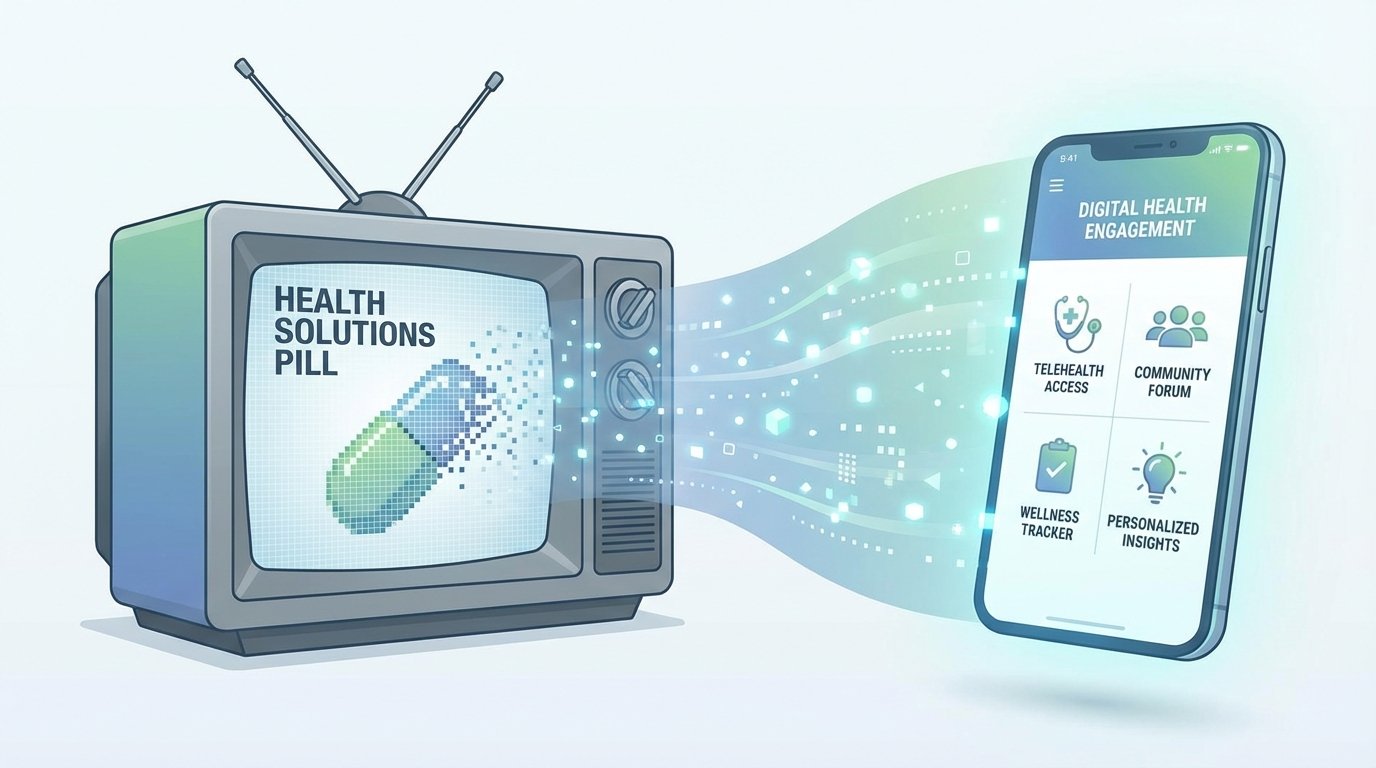
For decades, Direct-to-Consumer (DTC) marketing was a game of reach and repetition. In the U.S., this meant branded television spots; in Europe, it meant unbranded awareness. But as the experts at Smartpatient recently noted, „Traditional DTC was advertising. Modern DTC is access.“ The most profound shift occurring today isn’t regulatory—it’s functional.
Modern patients have become the „CEOs of their health,“ making critical decisions and searching for answers long before they ever enter a clinic. Branded awareness is no longer the competitive advantage; digital access is. This means integrating pharma directly into the patient’s digital workflow—through telemedicine platforms, mobile-first symptom checkers, and integrated ecosystems like _MyTherapy_.
While „awareness“ sparks interest, „activation“ is what drives outcomes. Activation closes the gap between knowing something is wrong and taking the next step. By providing trustworthy information and behavioral guidance at the exact moment of need, the industry is moving toward a frictionless entry point into the healthcare system, turning curiosity into real-world medical progress.
The $300 Billion „Patent Cliff“ is Pharma’s Greatest Innovation Catalyst
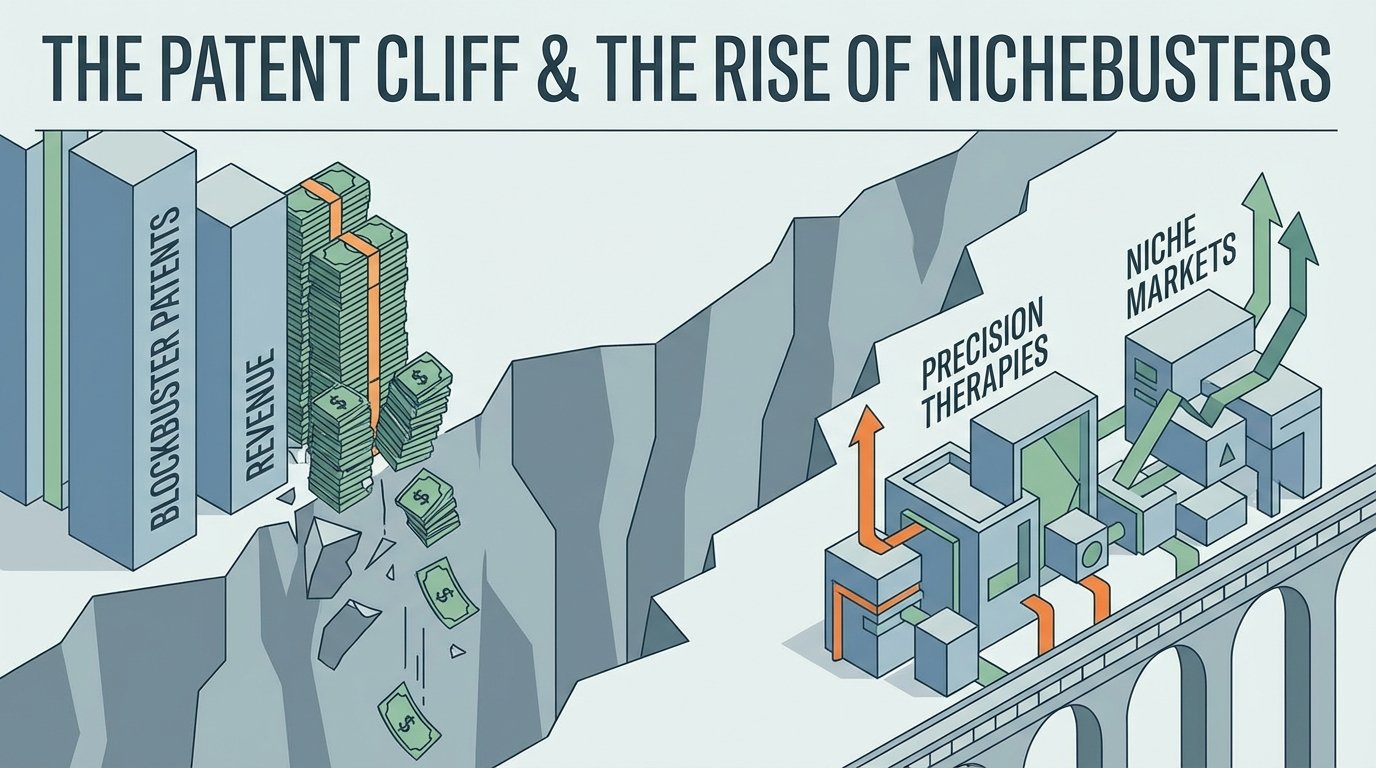
Pharma is currently staring down an unprecedented existential threat. Between 2025 and 2030, nearly $300 billion in annual global revenue is at risk as patents on titans like Keytruda and Eliquis expire. When these molecules lose exclusivity, market share can evaporate by up to 90% in a single year.
Counter-intuitively, this financial threat is the industry’s most powerful catalyst for innovation. It is forcing a move from high-volume/low-margin blockbusters to „nichebusters“—precision therapies for oncology and rare diseases. This fundamentally changes the organizational DNA, replacing armies of sales reps with highly specialized Medical-Scientific Liaisons (MSLs). To survive the „Loss of Exclusivity“ (LOE) events, the sector is adopting a New Playbook:
– Patient-Centric: Designed around holistic needs and daily behaviors rather than internal manufacturing cycles.
– Value-Based: Using outcomes-based models as a survival mechanism to prove real-world effectiveness to skeptical payers.
– PGHD-Fueled: Powered by Patient-Generated Health Data from wearables and biosensors to track real-time adherence and quality of life.
Stop Saying „Omnichannel“—The Future is „Optichannel“
For years, „omnichannel“ has been the industry’s favorite buzzword, yet its execution has been largely fragmented. Too many companies simply „bombard“ physicians with generic messages across every available platform. This „messy“ execution is being rejected by a new demographic: the AI-native physician.
The industry is evolving toward Optichannel engagement. This is not about being everywhere; it is about using surgical precision to select the _optimal_ channel for a specific person at the exact moment it adds value to their workflow.
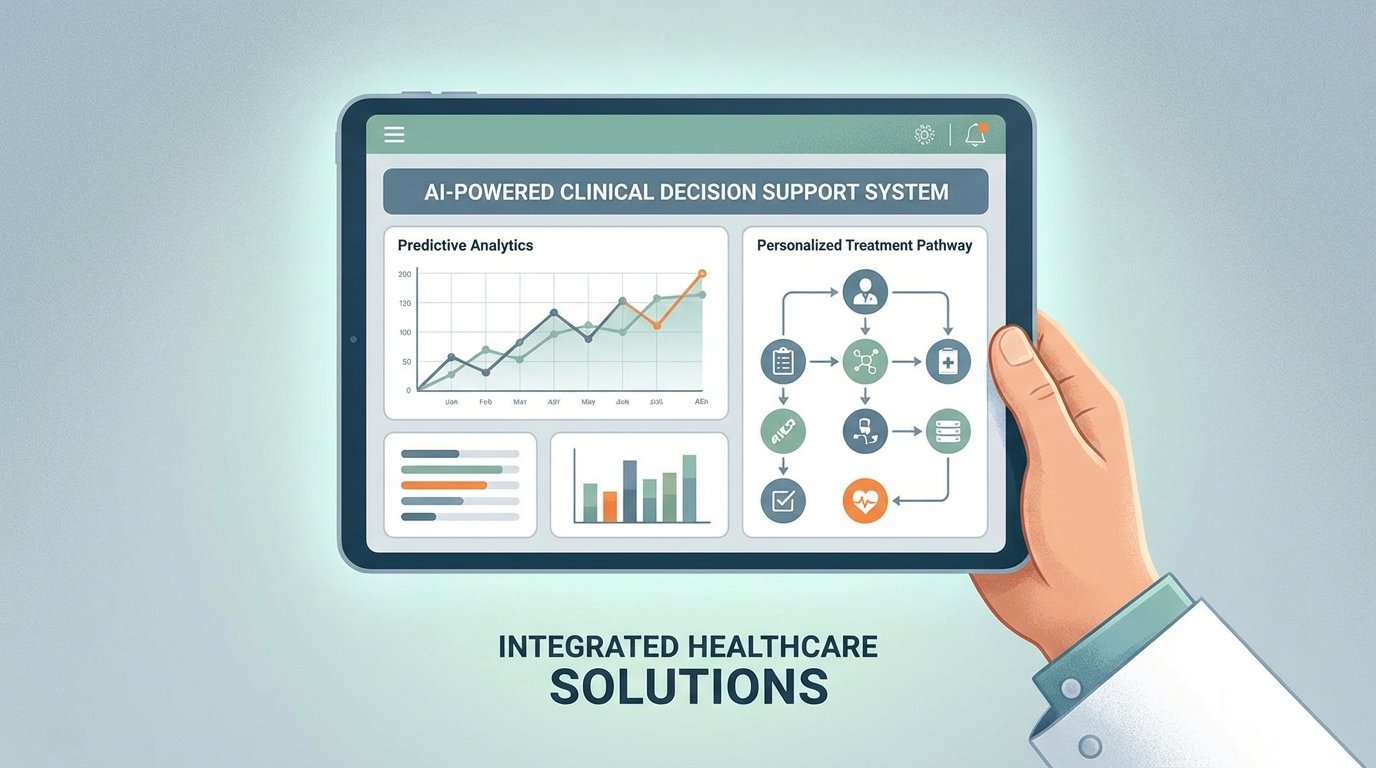
These AI-native clinicians expect data to be integrated directly into their Electronic Health Record (EHR) systems. They don’t want more communication—they want relevant decision support. By using predictive analytics, pharma can move from broadcast marketing to providing a personalized, e-detailing service that fits seamlessly into a clinician’s treatment planning, reducing information overload while increasing clinical utility.
AI is Moving Toward „Lights-Out“ Operations
We have moved past AI as a buzzword and into the era of „Applied AI.“ The focus is shifting toward „lights-out“ functions—the total digitization of core processes to compress decision cycles from months to minutes.
The emergence of „Medical Reasoning LLMs,“ such as IQVIA’s Med-R1 8B, is a prime example. Unlike standard generative models, these are built specifically for healthcare organizations to enhance sophisticated decision-making and transform patient outcomes.
Furthermore, the rise of „Agentic AI“ is creating a hybrid human-AI workforce. In this model, AI doesn’t just automate text; it amplifies human judgment. By handling the transactional „machinery“ of the enterprise—from R&D documentation to supply chain optimization—AI allows humans to focus on the creative frontiers of science. This shift is turning the pharma enterprise into a self-learning network that scales innovation at the speed of data.
The End of „Payment per Pill“—The Rise of Value-Based Contracting (VBC)
The traditional „Fee-for-Service“ model is economically unsustainable in a world of $5 trillion healthcare costs. The „Humira Strategy“—the use of dense patent thickets to block competition—has acted as a final catalyst for this shift. Payers are revolting against these „evergreening“ tactics and demanding proof of effectiveness before payment.
This has led to the rise of Value-Based Contracting (VBC), where reimbursement is directly tied to performance.
| VBC Model | Mechanism |
| — | — |
| Outcomes-Based Rebates | Manufacturers provide rebates if pre-agreed clinical targets (e.g., biomarker levels) are not met. |
| Indication-Specific Pricing | Pricing a drug differently based on its varying effectiveness for different diseases (e.g., oncology vs. immunology). |
| Shared Savings | Manufacturers and payers share in the savings generated by reduced hospitalizations or avoided acute events. |
Conclusion: The Brand Moat of the Future is Trust
The transformation of the industry by 2030 will result in a „PharmaCo of the Future“ that prioritizes „patient success“—defined by adherence and improved quality of life—over simple prescription volume.
In a world where molecules can be copied and AI is ubiquitous, traditional competitive advantages like patent thickets are becoming less durable. The only lasting brand moat is the trust earned through human-centered design, ethical data use, and a commitment to global health equity. The industry’s evolution from sickness management to lifespan partnership is not just a strategic choice; it is an economic necessity.
——————————————————————————–
_Is your healthcare experience becoming a transaction, or a lifelong partnership?_